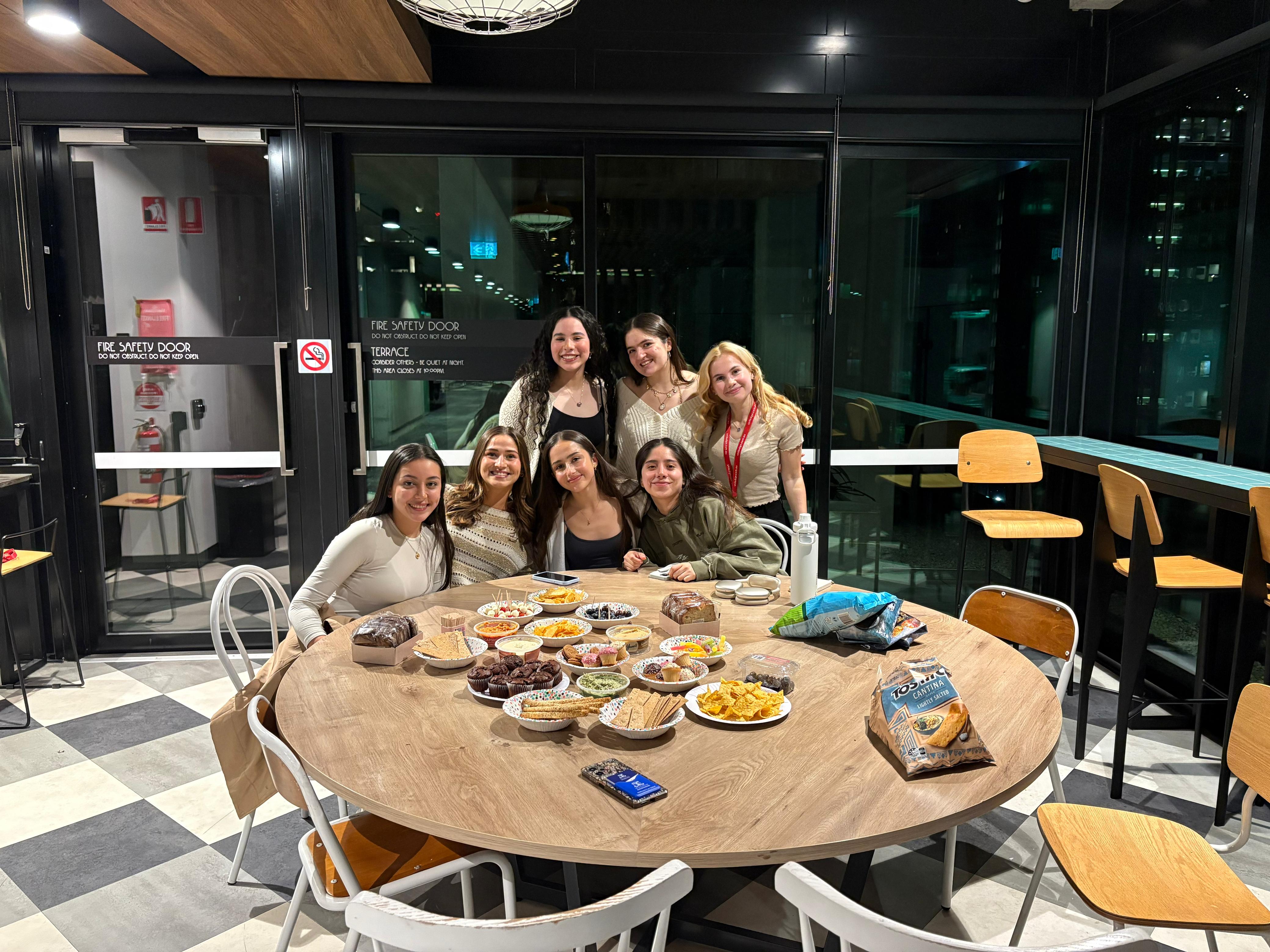
From smiling strangers on the street to life-changing lectures in intercultural communication, Iryna Neschotna’s semester in Australia was far more than an academic exchange. Studying in Melbourne pushed her beyond her comfort zone, challenged her academically, and ultimately helped her rediscover confidence, clarity, and a deep passion for linguistics that will shape her future.
What was the biggest cultural surprise or difference that hit you right away?
There were quite a few, to be honest. First of all, Australians smile a lot. When you walk down the street and make eye contact with someone, you smile—on public transport, in cafés, everywhere. Very often, a smile comes with a casual “How are you?”, and what surprised me the most is that people genuinely care about the answer.
Another noticeable difference was café culture. Unlike in Europe or the US, tipping is not part of Australian culture, and the whole ritual of eating out feels different. In my home country, Ukraine, you usually have to raise your hand to call the waiter when you want to pay. In Australia, once you’re done eating, you simply walk up to the counter and pay there. It’s a small detail, but it reflects a much more relaxed and informal approach to everyday interactions.
What was your favorite course/subject you took in Australia, and why did it stand out?
I absolutely loved Intercultural Communication, as it played a crucial role in shaping how I see my future career path in linguistics. The subject, rooted in linguistics, stood out as incredibly interactive, innovative, and up to date. Most importantly, it was refreshingly stress-free, as it was entirely assignment-based.
Throughout the semester, I worked on a research paper on address terms and completed a group project focused on identity formation through narrative inquiry analysis. This assignment allowed me to conduct my very first academic interview, which was both exciting and empowering. I was always looking forward to lectures and actively participating in intense and thought-provoking seminar discussions.
Another highlight was the diversity of the classroom: my classmates came from all over the world, which made connecting with people and forming friendships effortless. If I were to recommend one subject to anyone coming to Melbourne next semester, I would say without hesitation, “take Intercultural Communication”.
What was the most challenging assignment or exam you had, and how did you manage it while also adjusting to life abroad?
Without a doubt, the most challenging experience for me was the German 4 module exam. After the compulsory placement test, I was placed into a course two levels higher than my actual proficiency. From the very beginning, the subject felt overwhelming, and after each class I had to spend several extra hours trying to understand what was happening.
Gradually, however, things started to make sense. Step by step, I adjusted to the pace, and the material became more manageable. The exam itself was particularly stressful, it took place in the Royal Exhibition Building, where around 3,000 students from different faculties were sitting their exams at the same time. The atmosphere reminded me strongly of my national exams back home, which naturally heightened my anxiety.
Thankfully, once I opened the exam on my laptop, I managed to focus and perform reasonably well. Overall, adjusting to life abroad was not overly difficult for me, as I am already an international student in Vilnius. Life in Australia itself felt like a blessing. Still, challenging myself academically, especially in German, was truly demanding.
Looking back, what’s one thing you learned academically during your semester in Australia that you’ll carry into your future studies or career?
I am returning home with a clear and confident understanding that I want to pursue linguistics rather than literature as my degree focus. This question had been a major uncertainty for me throughout my two years at Vilnius University. Realizing my deep love for linguistics during my studies at the University of Melbourne feels like an incredible gift that I will always be grateful for.
What’s one Australian habit, food, slang word, or place that you’ll bring back home?
I’m definitely bringing back a bit of the Aussie accent with me. More importantly, though, I’m taking home a new approach to life in learning to take things as they come. The truth is that I’ve struggled with terrible anxiety for many years, shaped by high school experiences, the war, and university life. Once I found myself on the other side of the world, surrounded by a relaxed lifestyle, minimal academic pressure, a stable social life, regular sports, cultural diversity, and incredibly kind people, I finally felt at peace. Australia taught me to be more accepting of others, of myself, and of the unexpected moments that life brings.
If you could relive one single day from your entire time in Australia, which day would it be and why?
I would love to relive my very first day in Melbourne, exploring my new dormitory, walking around campus for the first time, eating my first Aussie brekkie next to the dorm, and, most importantly, meeting one of my dearest friends who stayed with me throughout the whole exchange and who I am planning on visiting in summer. I would want to experience that day again with the awareness of everything that was still ahead of me, and to feel once more the deep sense of gratitude for everything that unfolded during the semester.
What’s the one thing you learned in Australia that you think will stay with you forever?
I’ve learnt that I am capable of far more than I could ever imagine. Being surrounded by people who dream boldly and fearlessly is an experience unlike any other and teaches you to strive for the greater yourself.
Would you recommend doing a semester in Australia to other students? In one sentence, why or why not?
Absolutely yes. If you ever get the chance to be brave, to leave your comfort zone and travel to the other end of the world, then go because you might meet a version of yourself you never knew existed.