𝗛𝗼𝗺𝗲 𝗮𝗻𝗱 𝗔𝘄𝗮𝘆 returns this semester with another collection of personal stories. What does it mean to leave home and find yourself somewhere new? What do we carry with us when we cross borders? What makes a place feel like home?
Through this series, we invite you to meet some of the people behind our international student community, discover their journeys, hear their perspectives and learn what studying, living and belonging in a different country means to them.
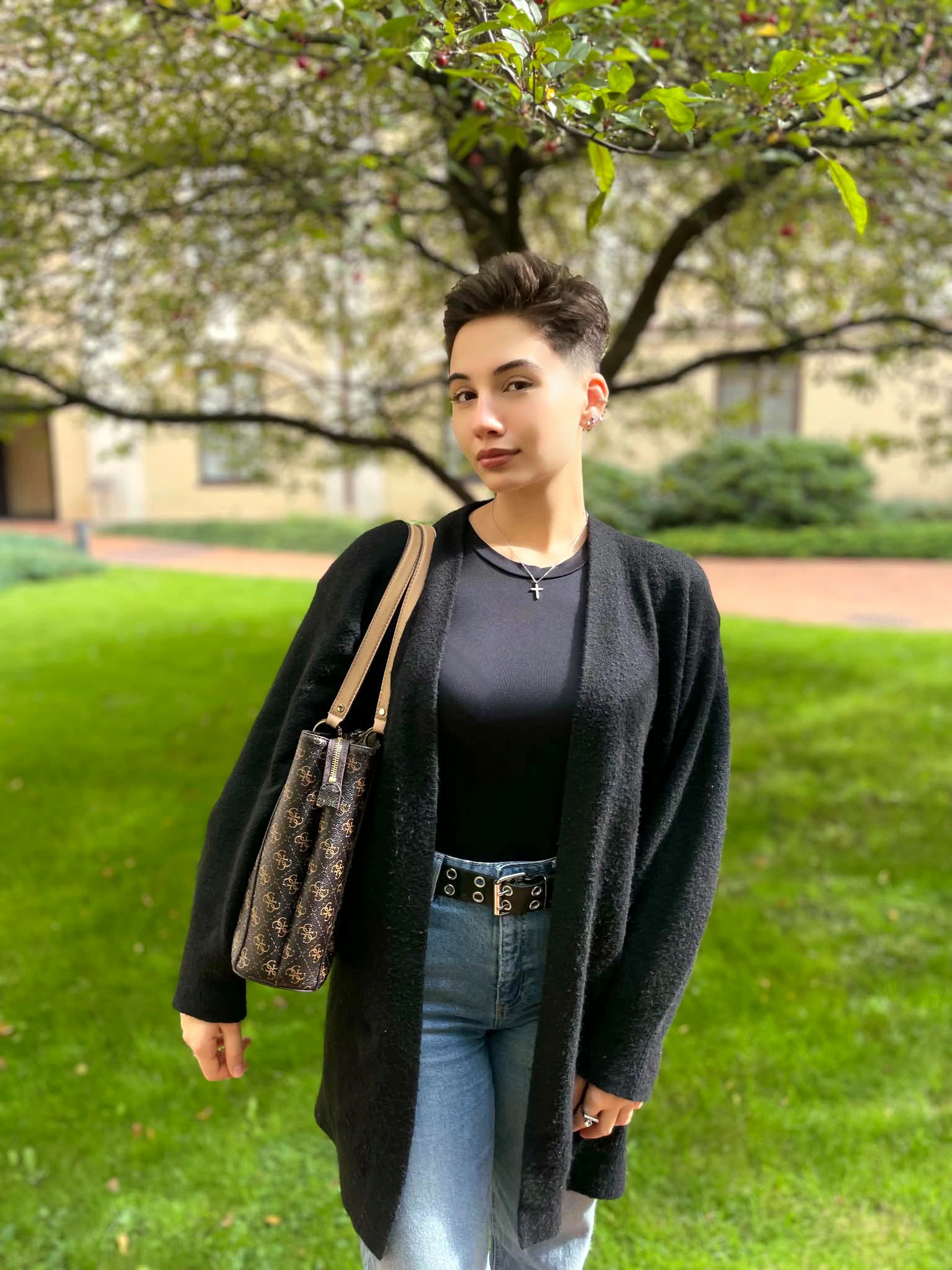
Meet 𝐉𝐚𝐦𝐢𝐥𝐚 𝐌𝐚𝐧𝐚𝐟𝐥𝐢, 𝐚 𝟑𝐫𝐝-𝐲𝐞𝐚𝐫 𝐄𝐧𝐠𝐥𝐢𝐬𝐡 𝐏𝐡𝐢𝐥𝐨𝐥𝐨𝐠𝐲 𝐬𝐭𝐮𝐝𝐞𝐧𝐭 𝐟𝐫𝐨𝐦 𝐀𝐳𝐞𝐫𝐛𝐚𝐢𝐣𝐚n!

 What originally inspired you to choose Vilnius University and the English Philology programme?
“There were plenty of reasons, actually. Vilnius University has a very strong reputation, and I have heard so many positive things about this institution. My sister also graduated from here, so I already had a personal connection to the university. And I really love the atmosphere here: the architecture, the history, literally everything — it matters to me. I don’t want to wake up and think, ‘Oh no, I have to go to university again.’ I actually really enjoy coming here. As for English Studies, I grew up in a multilingual environment, so languages have always been an integral part of my life. In the end, I realized that choosing something I genuinely love and am good at was simply the right choice for me.”
What do you enjoy most about living and studying in Vilnius so far?“I’ve known Vilnius for many years, and I’ve always been fascinated by its beauty and architecture. I love how the city can feel so different from one street to another: you have Gothic, Renaissance, Baroque and Classicism, but somehow there’s still this incredible sense of peace. And I think that feeling of peace is what I value most about living here. I’ve always believed that there’s a place where you’re born, and a place that becomes your home — and Vilnius really feels like home to me."
What was something that surprised you when you first arrived in Lithuania compared to your home country?“To be honest, I don’t really remember my very first impressions of Lithuania, because I was a child when I first came here. But when I came back here already as a university student, one thing that really stood out to me was the academic environment. I was really impressed by how respectful and supportive professors are towards students. There’s a real sense of equality — you never feel that a professor is trying to place themselves above you. I think that kind of respect and support makes you feel much more motivated and helps you do your best.”
Have you had any memorable or fun intercultural experiences with fellow students during your time here?“Absolutely. One of the most memorable intercultural experiences I’ve had at Vilnius University was taking part in the Academic Debate Competition "Discourse and Society" (2026). What I found especially interesting was how many different backgrounds came together in one room — there were students from France, Greece, Ukraine, Georgia, Belarus, and many other places. And despite all those different backgrounds, we were all there for the same reason: to debate, exchange ideas and challenge each other intellectually. I remember, my teammate and I put so much work into it. We went through every argument, every part of the Opposition case, and spent hours discussing and rewriting things because we wanted everything to be as clear and precise as possible. The motion was extremely controversial and challenging, so the first few days were intense. But in the end, we managed to draw on our critical and analytical thinking as Philology students and turn the debate in our favour. And when it was finally time to speak, I gave it absolutely everything I had — everything I knew, everything I had learned, and, most importantly for me, I gave the audience the most genuine version of myself. I put so much of myself into those few minutes that, honestly, when I finished speaking, I had the worst headache. I think that says a lot about how much I gave to that moment. I was also really happy to be recognized as the Best Speaker by the British Ambassador, Mark Pass. That recognition meant so much to me, especially as an English Philology student. But more than anything, I think the experience showed me how much I can achieve when I really commit to something.”
What key insight or lesson have you gained from studying in such an international environment?“I think the biggest lesson has been learning that there isn’t always one ‘right’ way of seeing things. When you live in another country, especially from a young age, you constantly encounter different perspectives, and even try to absorb the culture and rhythm of life of the people here — you naturally become more open and adaptable. It has also made it much easier for me to connect with people from different backgrounds. And as a Philology student, I really value that kind of multicultural environment because it constantly broadens the way I see the world.”
What advice or recommendation would you give to future international students coming to Vilnius University?“As someone who came here as an international student myself, I would say: don’t be afraid to step outside your comfort zone and make a change. It can be difficult, and I won’t pretend that it is easy, but give yourself time to adapt and find your place. Don’t rush the process — I really believe that great things take time. Most importantly, give yourself a chance to take the first step. I truly believe you won’t regret it.”
Thank you, 𝐉𝐚𝐦𝐢𝐥𝐚, for sharing your story with us!
Prepared by Maria Dreer, a Year 4 English Philology student, as part of the Intercultural Communication Internship assignment.