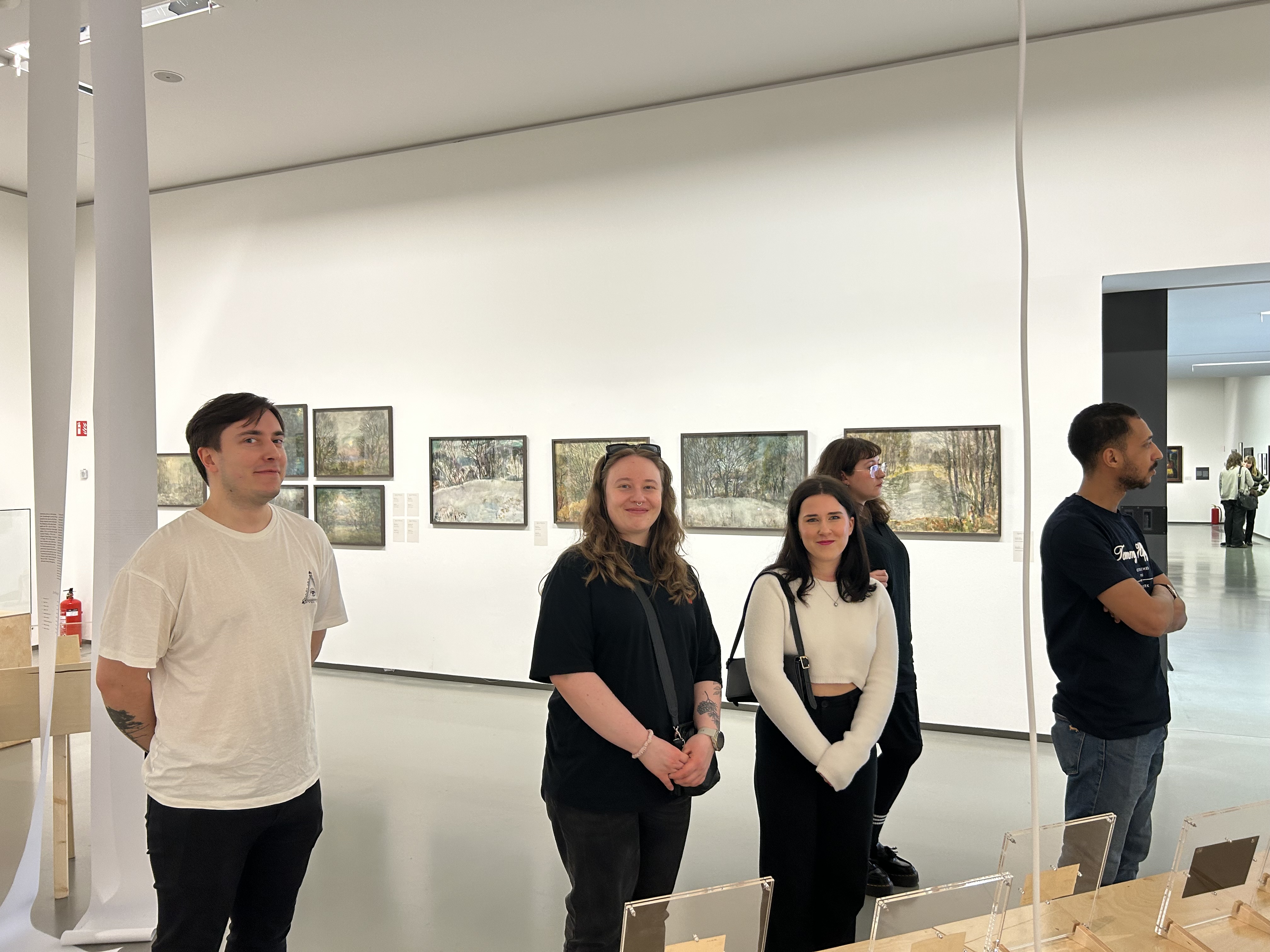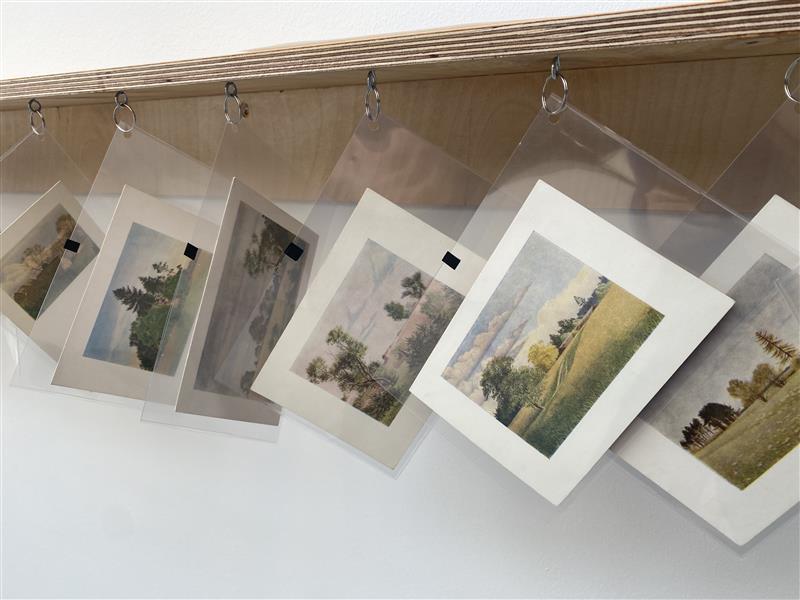
Students of English Philology (BA) and English Studies (MA) visited the Vilnius National Gallery of Art exhibition “Neįprastai daug šakelių: Lidos Meškaitytės ir Igorio Piekuro peizažai” (Unusually Dense Branchwork: Landscapes by Lida Meškaitytė and Igoris Piekuras) on Friday the 13th.
The exhibition tour was guided by its curator, who made the visit not only interesting but also very informative. She spoke in detail about the backgrounds of the two artists and the inspirations behind their work. At one point, she mentioned that she had even discussed the life and artistic development of Igoris Piekuras with his parents, which added a personal dimension to the presentation.
The tour began with an explanation of what connects the two artists. Although they belong to different generations, they meet through their shared attention to landscape. For both artists, the surrounding landscape becomes a meaningful artistic space where memory, change, and continuity unfold. In this exhibition, their works are brought together in a dialogue.
The curator then introduced the work of Igoris Piekuras. She explained how his artistic practice developed from early landscape painting toward more experimental approaches to form, texture, and imagery influenced by photography. Piekuras often addressed large-scale, universal themes, presenting figures that appear powerful and monumental to the viewer. His work was shaped by the historical context of the aftermath of the Second World War, the threat of nuclear conflict, and the tensions of the Cold War, all of which influenced the atmosphere and themes of his paintings. His compositions encourage viewers to pause and reflect.
The curator then turned to the work of Lida Meškaitytė, a self-taught artist. Her early artistic interests were shaped by literature, culture, and personal relationships. Over time, however, her attention increasingly focused on the forest and natural landscape. In her paintings, the forest appears as a living and independent subject, radiating quiet energy and drawing attention to small details that might otherwise go unnoticed.
Overall, the guided tour provided a deeper understanding of both artists and the ideas behind their work. Through the curator’s explanations, the students and colleagues were able to see more clearly how the two artists are connected through their interpretations of landscape and their reflections on the world around them.
After the tour concluded, the group was invited to explore the gallery independently and spend some time walking through the exhibition spaces, with the opportunity to visit other exhibitions currently presented at the gallery.
Prepared by Viktorija Timpaitė, English Philology, Year 4