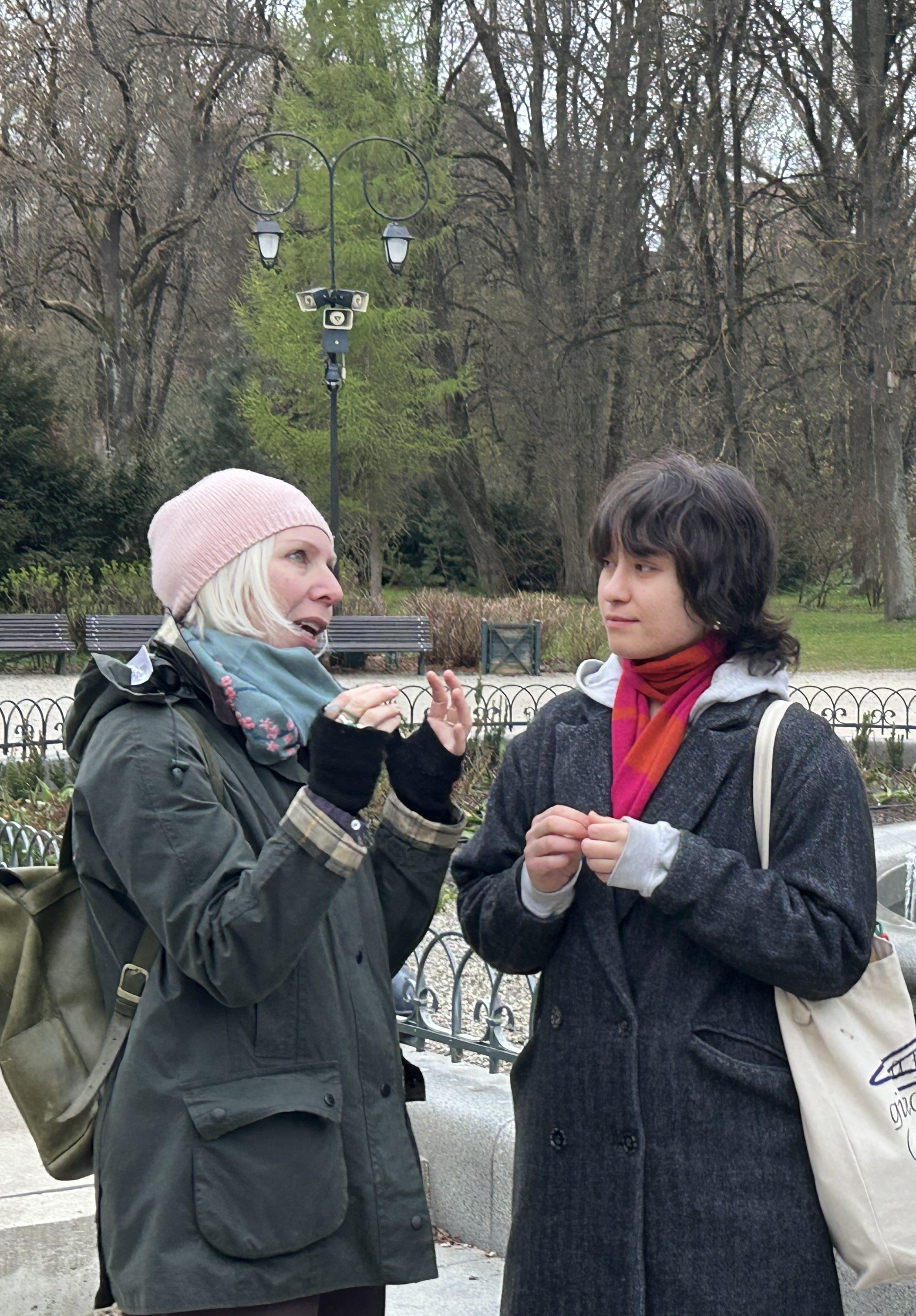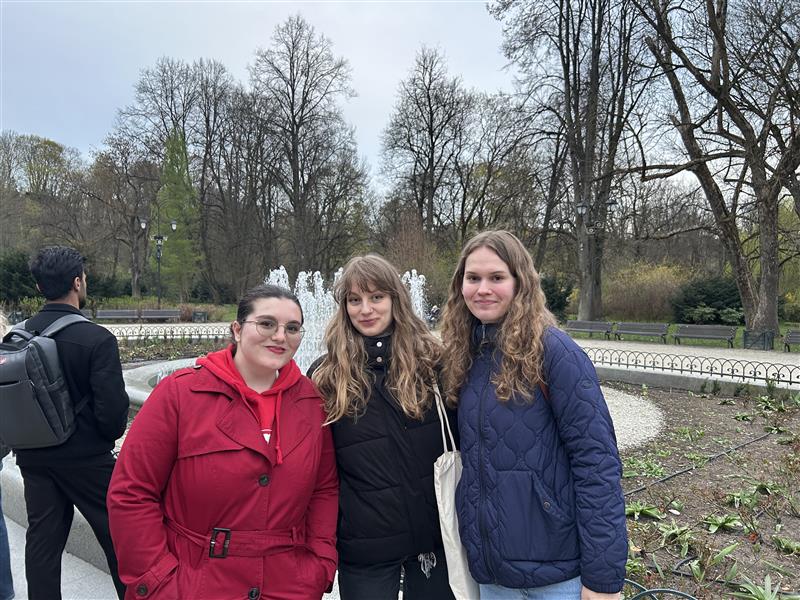
April 22 marked another memorable walk, “Nature and Gardens in Urban Environment,” led by Almantas Samalavičius, beginning at the English Philology Faculty and continuing through the streets of the old city toward the Bernardinai garden. The walk invited us to think of gardens not simply as designed landscapes, but as spaces experienced through the whole body, through smell, sound, touch, memory, and movement. It was a reflection on the relationship between mind and body, and on the ways gardens engage our senses beyond what we see.
As we walked, the history of urban gardens unfolded. Medieval cities, enclosed by defensive walls and shaped by necessity, had a limited open nature within them, yet monasteries preserved the tradition of gardens. Monks cultivated vegetables, medicinal herbs, and flowers, combining practical needs with symbolism and beauty. These enclosed gardens, or hortus conclusus, were ordered by symmetry and geometry, expressing ideas of continuity and harmony. Water played a central role, not only as a source of life for people and plants, but also as a sensory and aesthetic presence through ponds, channels, fountains, and baths. From Roman engineering to Renaissance gardens, such as Villa d’Este, water shaped both the physical and poetic imagination of gardens.
The walk also touched on how attitudes toward water and nature changed over time, from seeing water as a living and inspiring element to viewing it more narrowly as a resource, and how contemporary practices such as recycled water reconnect practical concerns with ecological awareness. These reflections resonated especially as we arrived at Bernardine Garden, situated between Gediminas Hill, the Vilnelė River, and the Bernardine Monastery. The garden became not only a place of historical memory but a living reminder that urban nature continues to nourish the senses, imagination, and cultural life of the city.
Prepared by Viktorija Timpaitė, English Philology, Year 4.