
 What can you do with a degree in English Philology?
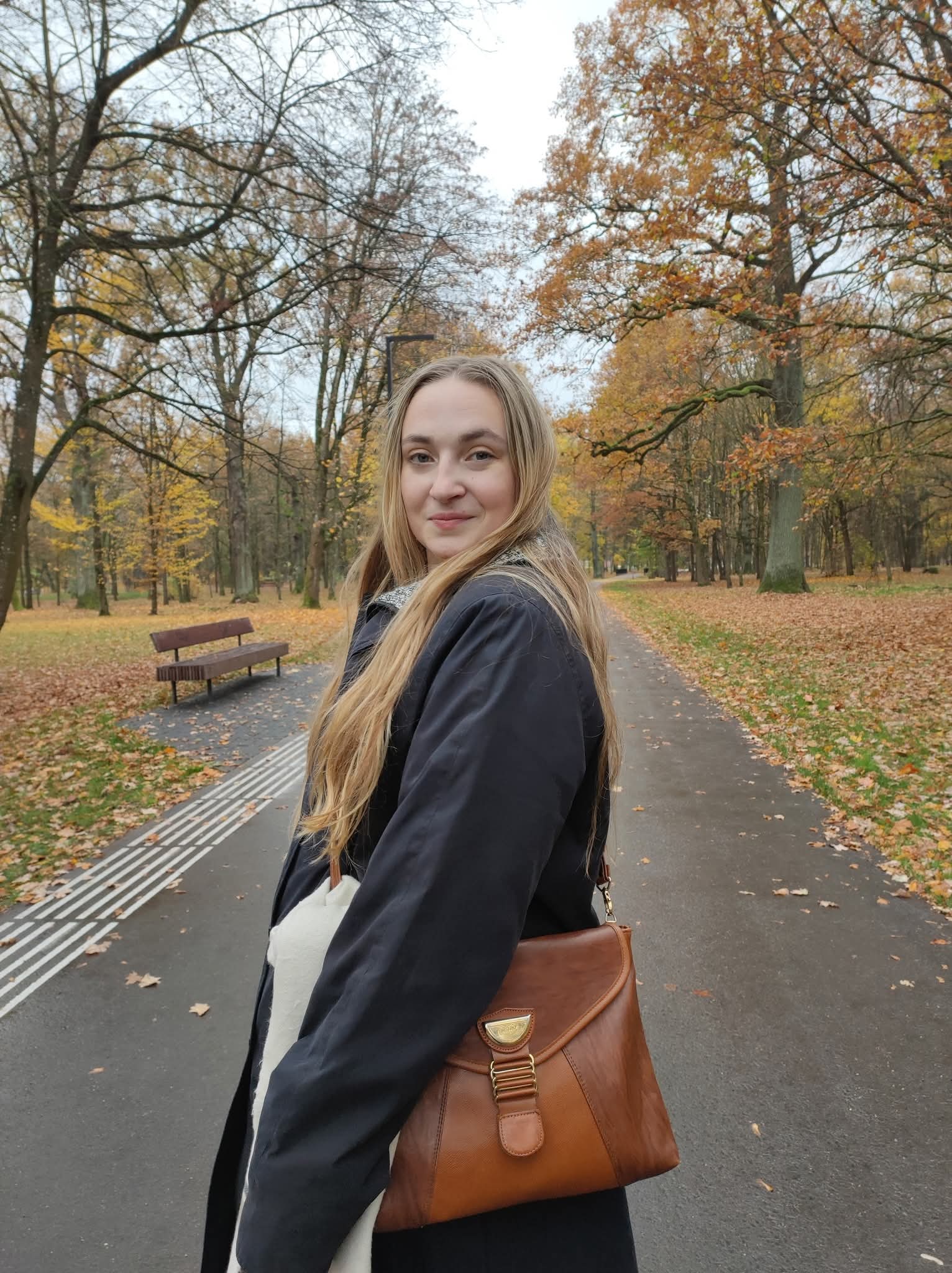
 This interview is made possible thanks to the kindness and generosity of 𝗗𝗼𝗻𝗮𝘁𝗮 𝗚𝗮𝘃ė𝗻𝗮𝗶𝘁ė, who graciously agreed to share her story and experiences with our community. As a lovely reminder of where every journey begins to take shape, 𝗗𝗼𝗻𝗮𝘁a’s BA thesis was titled “All Creatures Great and Small: (Neo-)Victorian Fossil Hunting in Tracy Chevalier’s Novel Remarkable Creatures.”
We hope 𝗗𝗼𝗻𝗮𝘁𝗮’s story will inspire those who are preparing to graduate next year, those who are just beginning to think about their future, and those who are considering becoming part of our community.
Welcome—and enjoy the interview! What did your path look like from graduation to your current job? How many different jobs have you held along the way?The path was always steered by the English language. I started as a translator for a marketing company, then moved on to work at the European Institute for Gender Equality, in the most inspiring international team. I also started teaching English on weekends at Vilnius Business College and got an opportunity to translate children's books, and really enjoyed returning to what felt like my roots: the English language and literature. Then I discovered a job offer for my current position, which is an international student manager. I have been feeling the pull of academia lately, and I accepted the job.
Which specific competencies gained during your studies are most useful in your current work?Critical thinking skills and, surprisingly, the ability to write well. Of course, the English language too . I am sure critical and analytical thinking skills are essential and will be a great asset in any job but I also discovered how beneficial the ability to write an email quickly and clearly can be, in addition to being able to edit and improve documents and write reports well. It is becoming a rare skill to write an email without the help of artificial intelligence these days, and I keep discovering how few people still want and can do it.
. I am sure critical and analytical thinking skills are essential and will be a great asset in any job but I also discovered how beneficial the ability to write an email quickly and clearly can be, in addition to being able to edit and improve documents and write reports well. It is becoming a rare skill to write an email without the help of artificial intelligence these days, and I keep discovering how few people still want and can do it.What skills are most valued in today’s job market? What should graduates have “in their backpack” when entering the workforce?I think the most valuable skills today are resilience, self-sufficiency, balanced with an ability to work in a team, and critical thinking skills. I believe these skills form a well-rounded employee, and I am not only thinking about what the employers seek but also what would be beneficial for the employee. The ability to plan your work, divide the workload, make decisions, delegate, be a reliable person in a team and keep a work-life balance are very necessary in the current job climate.
Did you need to learn new things after graduation to adapt to the demands of the job market?Yes, absolutely. I am very aware now that some things you can only learn by actually experiencing having a job. I would say the main things I had to learn were what role I can play in a team, based on my character traits and how I work and what I am best at, and what I am not so good at, and also how to stand up for myself without being interpreted as rude or unhelpful. This knowledge came with experience, having worked in a variety of environments, from local to international, meeting colleagues and observing how they handle themselves, experiencing my first more complicated situations at work, negotiating salaries and work schedules. It was not easy to gain these skills but they are essential.
What has been your biggest professional challenge so far, and how did you overcome it?My biggest professional challenge was adapting to a new environment, which was unfamiliar and at first seemed completely unsuitable for me. I suppose many people can have that feeling when starting a new job. The challenge was to discover if I can fit in and, more precisely, how do I create my own role here. I overcame it slowly, day by day but looking back at it, it helped me grow a lot as a person and as a professional. This challenge also opened new doors for me. I discovered a completely new field of work I now enjoy doing, and it helped me to see perspectives in the future, as a growing professional in that field.
Do you have any advice for current students who are just starting to think about their career paths?Firstly, I would like to say I understand any fears you might have, and they are very valid. The job market is unpredictable, and one must protect oneself in it. I have been unsure many times before signing a contract, fearing the job would be something I would not actually like or be able to do. However, I would like to advise to try despite the fear, because that is the only way to find out if you can handle it. There is no way of finding it out before starting the job. I would also advise to always stand for oneself, read all the documents before you sign them, and be hopeful. There are many good things in the job market too, and every person discovers them for themselves.
In your opinion, what are some of the “invisible” benefits of studying English Philology that only become clear once you start working?The fluency with which you handle texts, the clearness and speed of your email writing, and again, critical thinking, meaning you are fast to analyse situations, notice important details, make detailed plans, and most likely be a great, fluent speaker. I have noticed that many people value such traits in a colleague, as well as in a subordinate. You will also bring a lot of creativity with you, I'm sure, as all my coursemates were very creative in their own ways, and that will be beneficial not only for solving problems or coming up with ideas but also for selecting a place for lunch or picking a book to read on your commute, which is also a big part of your working life.
Thank you, Donata, for sharing your story with us!