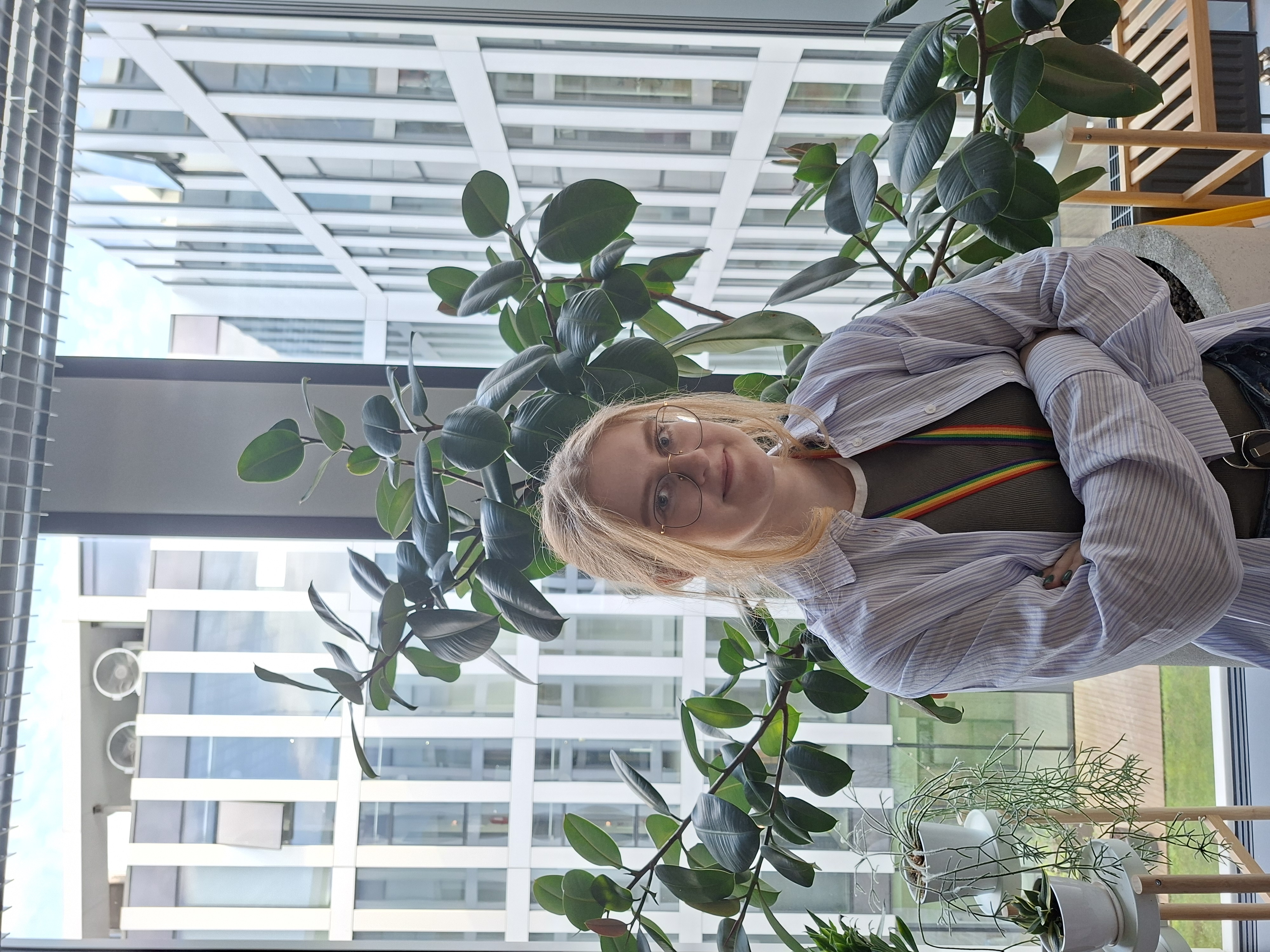

 What can you do with a degree in English Philology?This interview is made possible thanks to the kindness and generosity of 𝗗𝗼𝘃𝗶𝗹ė 𝗨𝗿𝗯𝗮𝗻𝗮𝘃𝗶č𝗶ūtė-𝗔𝗹𝗺𝗶𝗻𝗮𝘂𝘀𝗸𝗶𝗲𝗻ė, who graciously agreed to share her story with our community. As a lovely reminder of where every journey begins, 𝗗𝗼𝘃𝗶𝗹ė's BA thesis was titled "Metaphorical Language in Popular Science Literature: A Case Study of Richard Dawkins".We hope 𝗗𝗼𝘃𝗶𝗹ė'𝘀 story will inspire those who are about to graduate next year, those who are just beginning to think about their future, and those who are considering becoming part of our community.
 Welcome—and enjoy the interview! What did your path look like from graduation to your current job? How many different jobs have you held along the way?
Since getting my bachelor's, I took a bit of time to decide what I wanted to do with my life. I took a gap year to travel, during which I decided to go back to my Alma Mater to get a master's in written translation.
In parallel, I started working in a bank as a back office specialist and later transitioned into a role of a business analyst in another company. I finished my studies, but decided to stay in the path of working in IT, as it fulfilled both my analytical and creative sides of personality. I received a promotion to Process Owner and started to work with designing process maps that portray the mechanics involved in the day-to-day operations of a financial company.
A couple of years later, as Process Design Specialist I started to do the same job for one of our unicorns - Vinted. As a tech company, I have always admired what they do and their ambition to aim high. So I'm glad to be where I am and see meaning in what I do.
Which specific competencies gained during your studies are most useful in your current work?Predictably, communication skills were the ones that I made most use of from my studies. Not only the language itself, but how it is used to achieve something. English is the main language used in my job, so I use it every day to communicate with stakeholders, negotiate requirements and moderate meetings. Using language as a tool, I've talked myself out of countless tricky business problems, sensitive situations or impasses and, vice versa, have talked myself into great opportunities, projects and sometimes even jobs. It's a great weapon to have, if you know how to wield it, as one of my professors would say. And now I know she was right.
What skills are most valued in today’s job market? What should graduates have “in their backpack” when entering the workforce?I think the most valued skill in today's market is the ability to learn. That was one of the best things that I learned in university as well, the ability to have discipline and develop neural pathways to quickly pick up skills. The fact is that today's market is so dynamic, that almost no particular skill stays relevant for a long time. That's why you have to stay sharp and be able to adjust your skillset to fit the changing environment. And also not dwell on the skills you've acquired that became obsolete for the exact same reason. Trust me, I know the feeling.
Did you need to learn new things after graduation to adapt to the demands of the job market?In a similar vein, I have used that ability to learn to pick up many specific skills needed for my work. I had also needed to learn to advertise those skills to potential employers, which is one of the skills that is often hardest to learn.
What has been your biggest professional challenge so far, and how did you overcome it?My biggest professional challenge so far has been to decide a career path for myself, even inside my current field of work. I have always had many interests that need to be cultivated and I like my work environment to be dynamic and creative. I like working with smart people to develop joint solutions, so it is not so easy to tell which role will fit me best - whether I will eventually be be buried by paperwork or with delegating work when I would actually rather be at the center of action. So I explored a few different roles in order to find out which one suits me best until I found the one I liked.
Do you have any advice for current students who are just starting to think about their career paths?My advice would be to not rush to decide what you want to do, but rather be more flexible when it comes to exploring different roles. Have a few ideas on what you want to do, but don't feel bad if it doesn't work out or you don't find it interesting - your path is not set in stone and you can change and adapt anytime you want to. Your bachelor's degree gives you the power to apply to a broad array of professions, whether it be in the field of linguistics or not. And the skills you gain are forever. You think you forget everything after each semester, but it is rather like riding a bike - once you pick it back up after a few years, it all comes back.
Also, don't forget to enjoy your studies. You will probably miss it more once you're finished. I remember being annoyed at having to read Virginia Woolf at the time, but now I consciously pick up classics to read in my spare time without being worried whether the book is too complex to enjoy. The ability to read difficult books is also a skill and I will cherish it for the rest of my life. As Emerson said "I cannot remember the books I've read any more than the meals I have eaten; even so, they have made me".
Virginia Woolf at the time, but now I consciously pick up classics to read in my spare time without being worried whether the book is too complex to enjoy. The ability to read difficult books is also a skill and I will cherish it for the rest of my life. As Emerson said "I cannot remember the books I've read any more than the meals I have eaten; even so, they have made me".In your opinion, what are some of the “invisible” benefits of studying English Philology that only become clear once you start working?I think the best benefit for me was learning to think critically and question everything. It makes you a better specialist in almost any field and a better problem solver. I might ask a million questions when doing a job, but it also eventually makes me more self-sufficient and knowledgeable. Also, being able to discuss and to make arguments in a respectful way. All this makes you a person that people want to work with and managers want to confide in, because you achieve a better result with the least time wasted.
Thank you, 𝗗𝗼𝘃𝗶𝗹ė, for sharing your story, insights, and experience with our community!