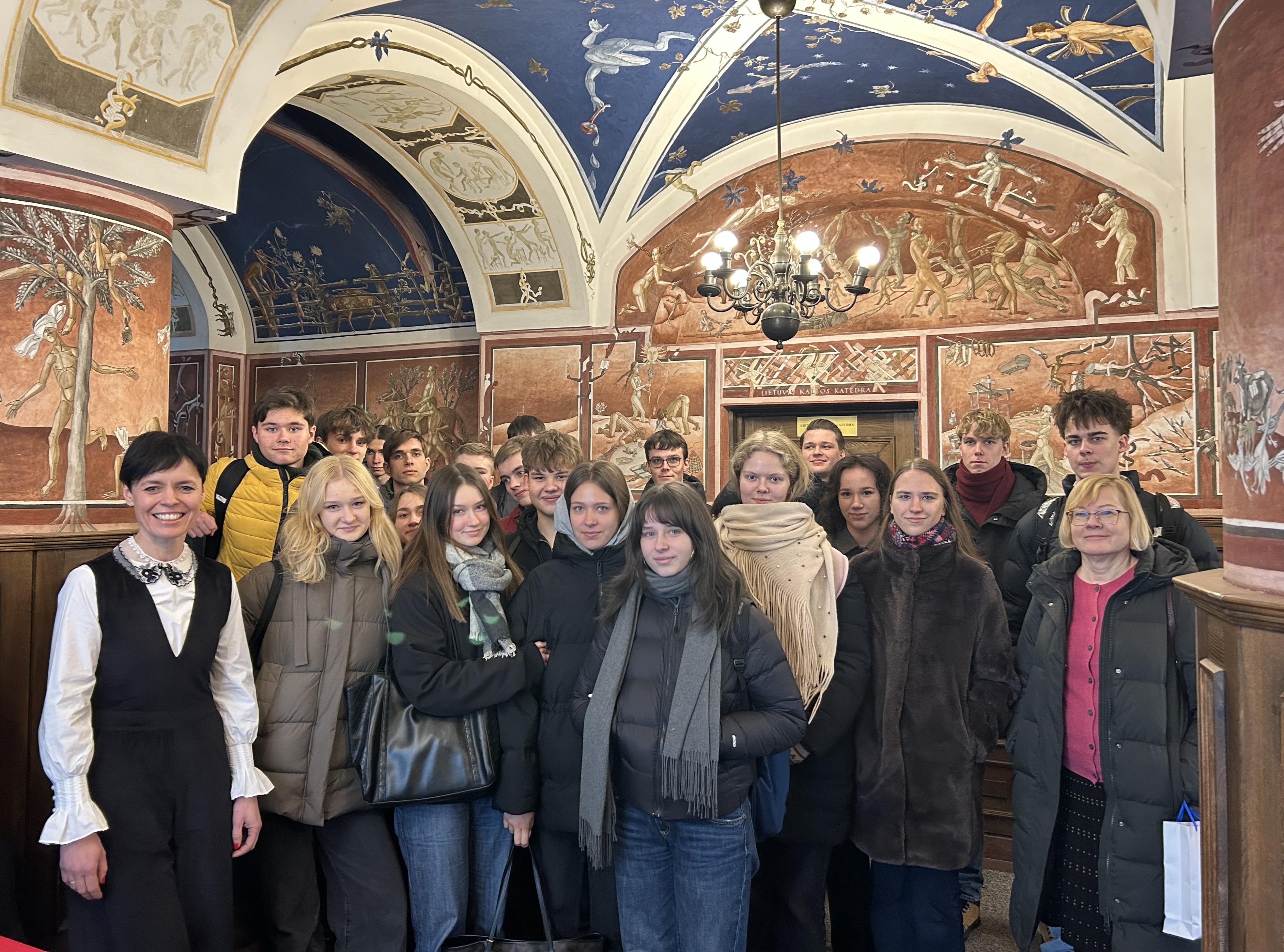
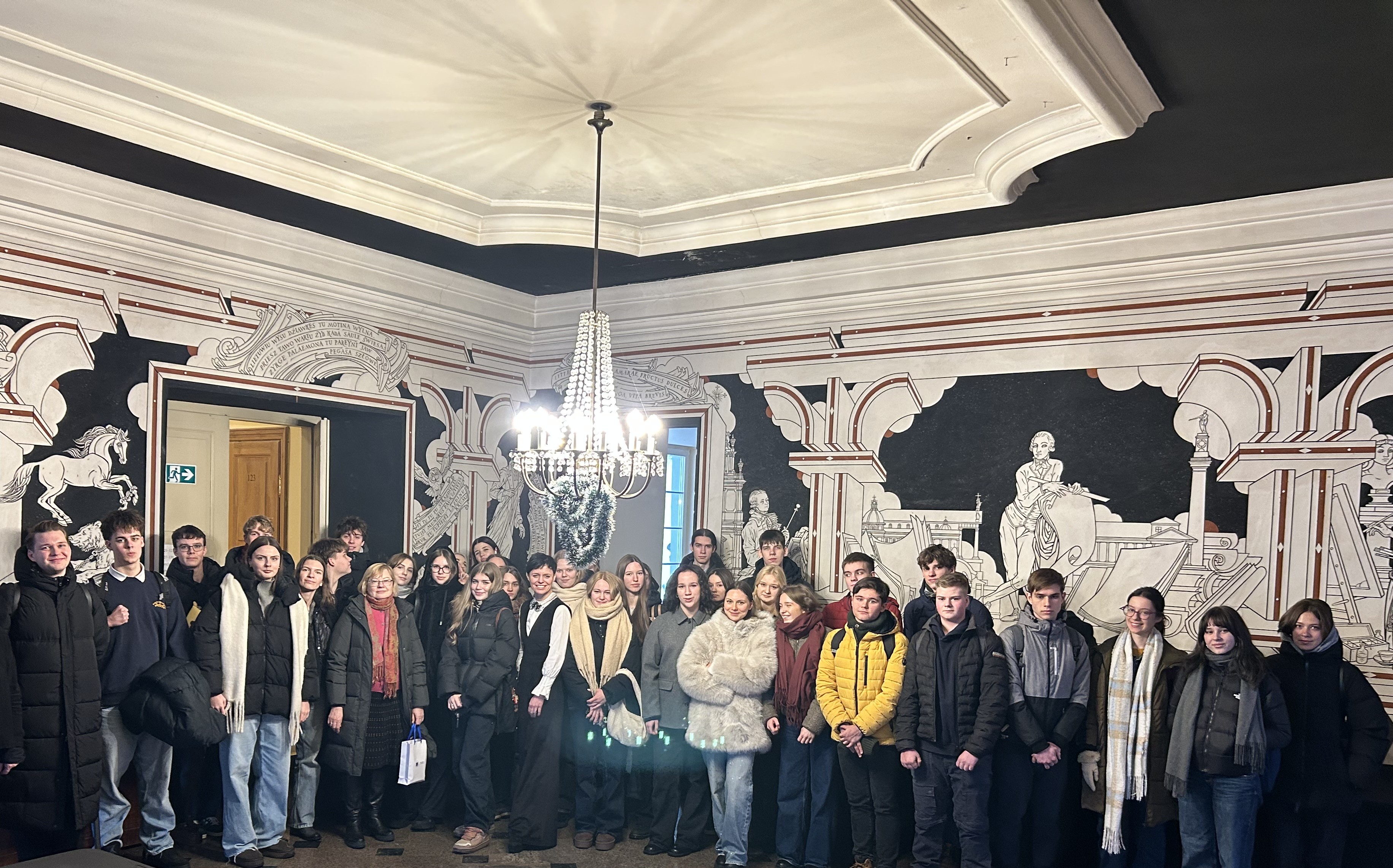
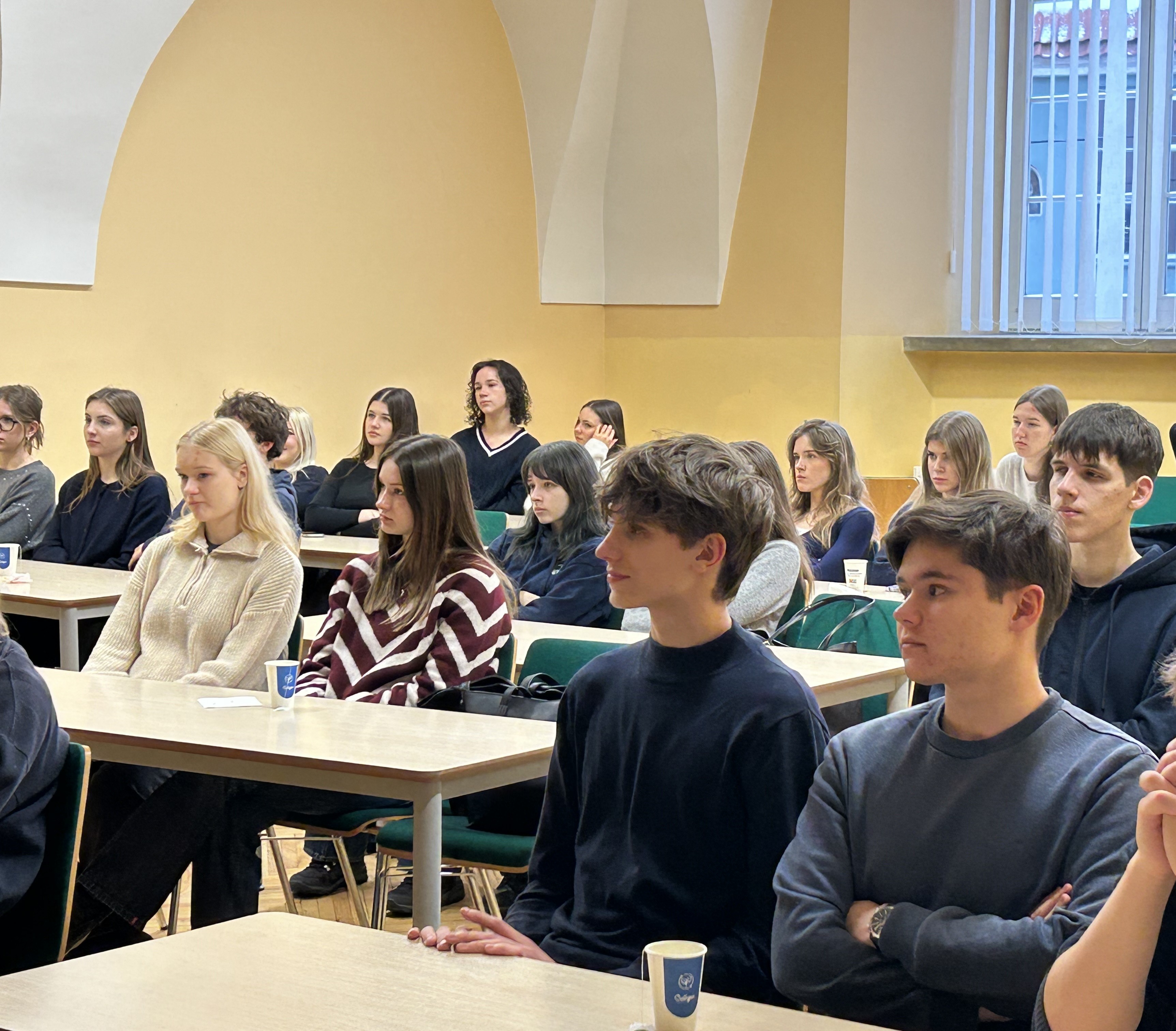
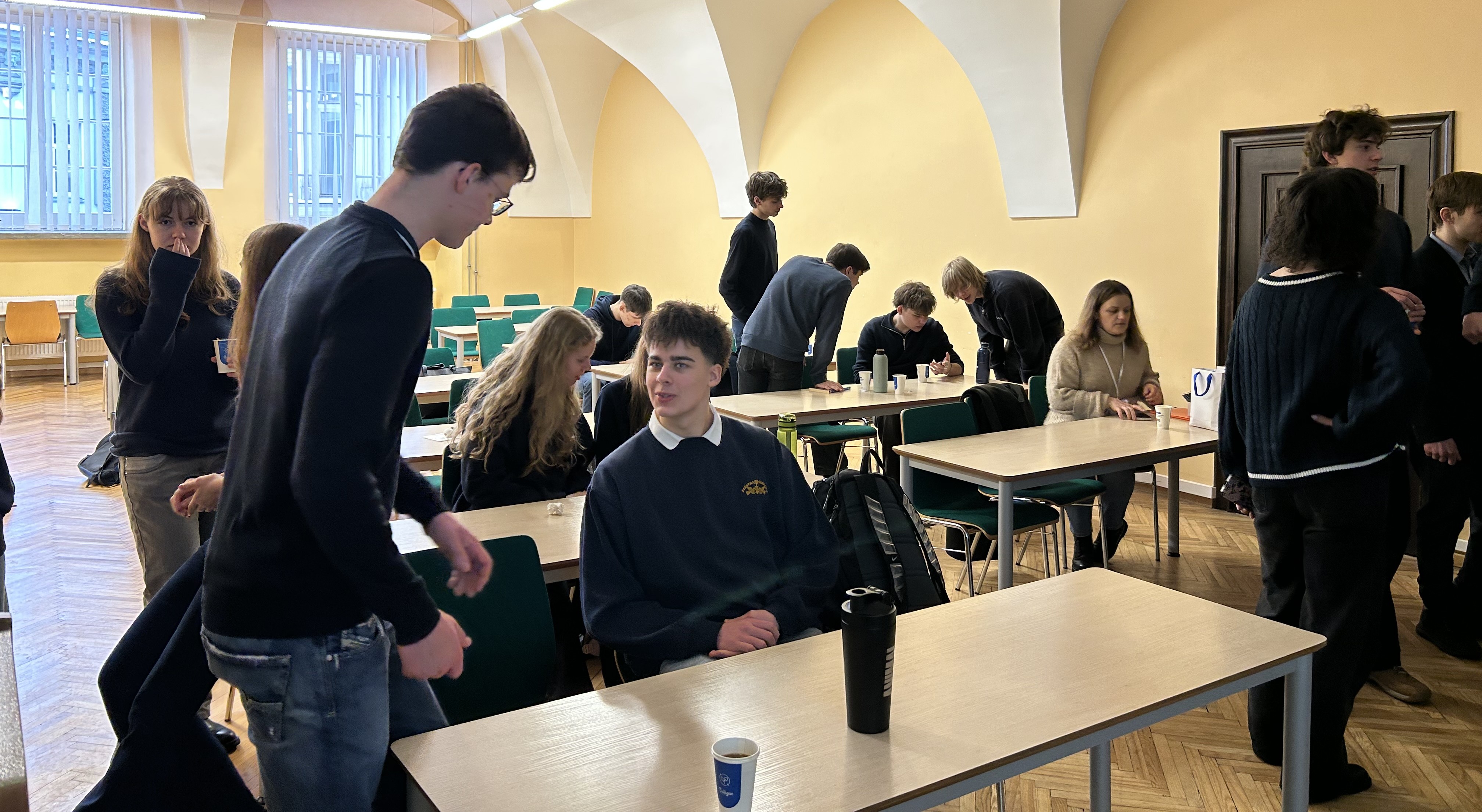
On January 5, students from Vilniaus Žvėryno gimnazija attended Anglistikos akademija and took part in two presentations that, although different in content, shared a common aim: learning to read, interpret, and question information more critically.
The seminar “Data Description Task: How to Prepare, Select, and Write” was designed for high school students preparing for the English language state exam and seeking greater confidence in the new mediation task introduced in Lithuania’s revised National Curriculum. The session focused on helping students understand what data description involves at B2+ CEFR level. Participants learned how to read graphs, tables, charts, and other visual materials, and how to transform this information into a clear, well-structured text. Step by step, they practiced describing trends, making comparisons, selecting key details, and explaining what the data actually shows. Common mistakes were discussed, along with practical tips that students can apply directly in the exam.
Students also participated in a literary seminar titled “Shakespeare’s Macbeth: Can We Trust What We See? Reality vs. Illusion”, led by Dr. Linara Bartkuvienė. The session combined close reading, discussion, and performance. To set the mood, students watched powerful excerpts from the 2023–2024 Donmar Warehouse production starring David Tennant and Cush Jumbo. The seminar opened with a choral reading of Act 1, Scene 1, drawing attention to the witches’ unsettling chant and Shakespeare’s use of trochaic tetrameter to signal moral and perceptual instability.
Through collaborative analysis, students explored how illusion and reality collide in Macbeth: deceptive prophecies, self-deception, and hallucinations that lead to paranoia and destruction. The discussion concluded with reflections on the play’s modern relevance, linking Shakespeare’s warnings to today’s world of social media, filters, and digital manipulation. Across both seminars, students were encouraged to look beyond appearances and to question how meaning—whether in data or drama—is constructed.